
 by Ernest Ian Jagorin
After the recent Visayas quake, many people once again asked the same question:
“Is it safe to be living in a condo?”
Let’s clear the air. Condo buildings in Iloilo (and across the Philippines) are not earthquake-proof — but they are earthquake-resistant. There’s a big difference.
“Resistant” means the structure is designed to move, flex, and absorb energy during an earthquake without collapsing.
To understand how that’s possible, here are five common engineering techniques used in modern high-rise condominiums — including those here in Iloilo Business Park — that keep our homes standing strong even when the ground shakes.
1️⃣ Reinforced Concrete Frames (with Ductile Detailing)
At the heart of most buildings are reinforced concrete (RC) frames — beams and columns that act like the skeleton of your condo.
Engineers design these with ductility, meaning they can bend slightly under stress rather than snap.
Think of it like bamboo — it sways but doesn’t easily break.
✅ What it does:
- Absorbs and redistributes earthquake energy.
- Prevents sudden, brittle collapse.
✅ Where you’ll see it:
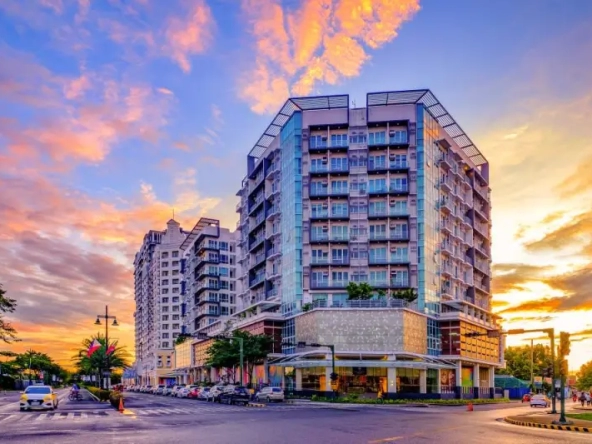
Every major condo tower in Iloilo Business Park — from The Pinnacle to Saint Dominique — follows this system under strict engineering supervision.
2️⃣ Shear Walls and Core Walls
These are the thick, solid walls around elevators, stairwells, and sometimes perimeter sections.
They’re not just for privacy — they act as the building’s spine, resisting side-to-side sway.
During an earthquake, they hold everything together and prevent the building from twisting.
✅ What it does:
- Adds lateral stiffness.
- Reduces the amount of movement and shaking you feel inside your unit.

3️⃣ Seismic Dampers (Shock Absorbers for Buildings)
Some of the more advanced high-rises — including those in Metro Manila and select Iloilo projects — now use seismic dampers, or “shock absorbers.”
These devices are hidden within the structure and act like car suspension — they absorb and dissipate motion during a quake.
✅ What it does:
- Reduces sway, protecting walls, glass, and interiors.
- Keeps residents more comfortable during aftershocks.
✅ Fun fact:
The St. Francis Shangri-La Place in Manila famously uses viscous dampers — a first in the Philippines.
4️⃣ Deep Pile Foundations
Ever notice how condo construction sites in Iloilo dig deep, deep holes before anything else goes up?
That’s because they’re installing pile foundations — long concrete or steel columns that anchor the structure to stable soil or bedrock.
In earthquake engineering, what’s under the building is just as crucial as the building itself.
✅ What it does:
- Prevents tilting or uneven settlement.
- Keeps the building stable even if upper soil layers shake or liquefy.
5️⃣ Strict Code Compliance (NBCP + NSCP)
Finally — and most importantly — every legitimate project must comply with two national laws:
- The National Building Code of the Philippines (NBCP)
- The National Structural Code of the Philippines (NSCP)
Together, they ensure that buildings are structurally sound, earthquake-resistant, and life-safe.
That’s why engineers often say:
“Sundon nyo gid na ya ang building code, indi pwede nga indi!”
Violating these standards can mean fines, shutdowns, or worse. But for reputable developers — like Megaworld — compliance isn’t just about paperwork; it’s about saving lives.
💬 The Bottom Line
Earthquake-resistant buildings are designed to protect life, not perfection.
Cracks might appear, tiles might shift — but that’s part of the design. Those minor damages are the building’s way of sacrificing itself to keep you safe.
So the next time the ground shakes, remember this:
Your condo was engineered to bend, not break.
And as one of my kumpares said best —
“A damaged building is better than a collapsed one.”